

Book Announcement – Graphical Analysis of Stock Markets
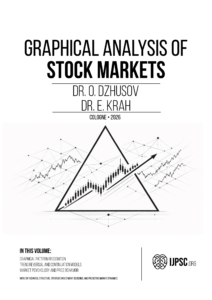
Upcoming: Financial markets look rational from a distance but anyone who has ever watched a chart long enough knows they are not. Prices move because people move them: hope, fear, hesitation, euphoria, panic. This book starts exactly at that point.
The volume introduces graphical analysis as a central pillar of technical analysis and explains, in a clear and systematic way, how price charts can be read as a language of collective behavior. Instead of treating charts as decorative lines, the authors interpret recurring price formations as visible expressions of market psychology and investor expectations. What traders call patterns are, in this perspective, structured reactions of human decision-making under uncertainty.
The reader is guided through the core foundations of the technical approach to stock market analysis and the essential instruments used by analysts and investors. Particular attention is given to classical chart formations that have repeatedly proven useful in anticipating shifts in market dynamics. Their structure, formation process, and practical interpretation are explained step by step and illustrated with real market data, allowing readers to see not only what a pattern looks like, but why it appears.
A major part of the book is devoted to application. The authors discuss concrete investment tactics derived from graphical models and critically reassess common trading practices. Several strategies are refined and, where necessary, corrected to better reflect contemporary market conditions. The focus is practical rather than speculative: the aim is not to promise certainty, but to improve judgment.
A distinctive contribution of the book is the presentation of the MDI (Modified Dow Indicator), developed by the authors. The indicator is designed as an early-warning mechanism for investors, signaling potential market corrections and severe downturns before they fully unfold. The book documents extensive testing of the indicator from 1998 to the present and demonstrates its capacity to identify phases of elevated market risk.
Combining conceptual explanation, empirical material, and practical guidance, the book addresses readers who want more than trading recipes. It speaks to investors, analysts, and students seeking a deeper understanding of how markets behave — and why charts, when properly interpreted, still provide meaningful information about the future direction of prices.